Showing posts with label Don Van Vliet. Show all posts

Saturday, December 31, 2016

Captain Beefheart — Strictly Personal

★★★✰

   In the history of rock music Captain Beefheart can be seen as an enfant terrible of experimental subgenres. From his debut he was one of most influencing figures, although his impact on various groups of musicians and listeners was varied. Acclaimed by critics, but generally unpopular in wide audiences, inspiring for many musicians and worshiped by group of fans, Captain Beefheart was highly creative, unconventional though he was using his creative ideas and in quite a traditional way being a kind of scarecrow for opportunists and conservatives. Although whole of his output is noteworthy, especially his early albums have the power of revolutionizing shape of rock and roll culture. But still these first experiments are in close bonds with deep stream of folk blues and traditional music.
   After successful debut album Safe as Milk, Captain Beefheart and His Magic Band became product of show business and had to play according to its rules. It was a part of the system to focus the style of the band in one of most popular sub-genres to better reach the target group. Material recorded initially in October 1967 for Buddah Records but it was rejected for its noncommercial character. Producer Bob Krasnow decided to publish the album in his own label Blue Thumb and finally Captain Beefheart’s second album was recorded at Hollywood Sunset Sound Studios in last week of April 1968 and was released in October 1968. Producer of the album added some trendy effect like extended phasing and reverb to make Magic Band sound more psychedelic.
   While transferring new album to another record company the primary concept of the album has been matter of change. Initially it was called It Comes to You in a Plain Brown Wrapper and cover design of Strictly Personal is a kind of remainder for this idea. What happened Buddah Records executives didn’t approve artist’s work was their disapproval for Don Van Vliet’s experimental attitude towards music. Captain Beefheart and His Magic Band came from social activism aiming to be radical artistic movement and expanding the boundaries of popular music beyond jazz or even contemporary artistic music. Debut album Save as Milk was compromise from both sides, but after it was published, artists work on more clear and advanced ideas while company was counting on reduction of risk and waiting for more moderate songs.

Captain Beefheart — Strictly Personal (1968)

   In 1967 executives of record company discarded the work done by musicians. After successes of Trout Mask Replica (1969) and Lick My Decals Off, Baby (1970), parts of 1967 autumn sessions were published in 1971 by Buddah Records as Mirror Man album produced by Bob Krasnow. During 1967 autumn imbroglio some ideas of sound structure had changed, but the personnel recording Strictly Personal remained unchanged. Ry Cooder left the band after Save as Milk. He was replaced by Jeff Cotton. This way Magic Band lineup had stabilized in 1967 with Alex St. Clair and Jeff Cotton (guitars), Jerry Hendley (bass), John French (drums) and Don Van Vliet (vocal and harmonica). This lineup stayed until 1970 when Jeff Cotton suffered in argument and left the band. This was moment when Don Van Vliet was experimenting with social engineering of the band, depriving musicians of sleep and food.
   Eight songs of Strictly Personal program is a collection differentiated and giving clear picture of band’s artistic explorations. Some ideas are more surrealistic than famous Trout Mask Replica masterpiece. While other Capt. Beefheart’s recordings in this period were based on traditional folk blues roots, ideas of Strictly Personal are more abstractive. Unofficial sixth band member was Bob Krasnow who edited bands recordings changing its initial sound and adding some alienating effects to make it sound closer to psychedelic bands. Even black and white photography of the band inside gatefold cover show masked band. In these outfit they look so strange, it is hard to determine if this is allusion to cheap science fiction movies or surrealistic vision of some archetypical characters of popular imagination.

Wednesday, September 30, 2015

Captain Beefheart and his Magic Band • Trout Mask Replica

★★★★★

   As Frank Zappa mentioned in his Real Book, under the ground of California rock scene in sixties, there was many independent musicians driven by ideas of progress and creative spirit. About many of them nobody remembers, but those who were putting their creative contribution in next decades, are now recognized as classics of California scene. Musicians and sound technicians led experiments with new sound and formal elements, trying to invent new possibilities of expression. One of most famous was Don Van Vliet known as Captain Beefheart who was combining raw blues vocal techniques with blues and rock, to create his unique vision of music. It wasn’t rock, although in 1980’s some authors were trying to place Captain Beefheart’s music in proto punk context. It wasn’t even blues, even if he made some efforts to make us think so. This music was his own mixture of avant-garde, blues, modern jazz and rock with citations from popular culture and artistic music, so probably progressive rock is most appropriate category.
   The problem with categorization of Captain Beefheart music is its changeability. He was using some different idioms giving some chances for various interpretations. Most complex and artisticly independent is Captain Beefheart’s third  album. In August 1968 and March 1969 Captain Beefheart recorded material for double LP album produced by his friend Frank Zappa. Released June 16, 1969 album Trout Mask Replica is absolutely the one of crowning moments in history of both progressive rock and experimental music. Whole musical material was created and rehearsed in one year period. Album has benn produced by Frank Zappa and published under Straight Records label being companion to Bizarre Records, the pair of companies for publishing more mainstream or more experimental musical projects. In fact Trout Mask Replica, although published by Straight Records, remains most unusual and un-straight album in both collections.

Captain Beefheart and his Magic Band — Trout Mask Replica (1969)

   The raw sound of and complex rhythmic patterns are most characteristic elements spanning to whole material of this album. Although in 1969, during recording Trout Mask Replica album raw sound was Captain Beefheart’s hallmark, this was first time when production was precisely connected with musical contents. In some parts minimalistic effects and atonality, in others folk blues and free jazz ideas interlock in multidimensional fabric. The precision of this band was legendary in next decades until digital recording technologies made possible similar effects. Most of these elements and ideas in 1969 were not new, but its combination was definitely fresh and for many listeners just shocking. This was time of dividing rock music into more popular, commercial popular music and progressive trends with plenty of formal ideas. As Frank Zappa proposed Captain Beefheart possibility of recording album with complete artistic freedom, this album become perfect example of expanding frontiers of rock and blues-rock genre.
   As a project of Captain Beefheart this was most ambitious and consequent undertaking. The line-up of The Magic Band was refreshed, all musicians’ names were replaced with nicknames. Drummer John French was called Drumbo, guitarist Jeff Cotton was covered under pseudonym Antennae Jimmy Semens, guitarist Bill Harkleroad was noted as Zoot Horn Rollo, playing bass guitar Mark Boston was under name Rockette Morton, and cousin of the leader, bass clarinetist Victor Hayden was The Mascara Snake. This unconventional way of presenting the band was consequence of earlier trend which result was nickname Captain Beefheart Don Van Vliet owed to Frank Zappa. Many uncredited musicians were taken from Zappa’s band Mothers of Invention, bass guitarist Roy Estrada, pianist Don Preston, saxophonists Ian Underwood and Bunk Gardner, trumpet player Buzz Gardner. Zappa himself is heard as speaking voice of engineer, but he was uncredited as engineer neither. Five stars with no redundant comments.

Tuesday, May 21, 2013

Captain Beefheart – Clear Spot

★★★★✰

   Captain Beefheart and The Magic Band were probably most uncompromising performers of crossover music during sixties. Its original style covers wide span of different directions from experimental rock to free jazz, and from R&B to protopunk. They were in situation of outcasts. After they met some artistic freedom in late sixties, when any kind of music was easy to sell just because of its counter-culture aspect many things have changed. Next decade became slow pursuit of solutions with commercial potential. This was much easier for naïve pop stars than for natural rebels, but in both cases it was inevitable.
   Like many others in early 1970’s, Captain Beefheart was evolving towards fulfilling audience expectations and to achieve commercial success. In his music the only reasonable solution was to merge experiments with blues and R&B sound. He was moving towards such idea for two years already. In fact, it was since Lick My Decals Off, Baby and Mirror Man when band was moving back to folk roots of progressive rock. Published in October 1972 Clear Spot became just next step in this direction, because it was also the last of Captain Beefheart’s albums before two commercial albums of 1974 – Unconditionally Guaranteed and Bluejeans and Moonbeams.


Captain Beefheart – Clear Spot (1972)

   The Magic Band played in 1972 sessions with guitarists Zoot Horn Rollo (Bill Harkleroad), Rockette Morton (Mark Boston), drummer Ed Marimba (Art Tripp) and Orejon (Roy Estrada) playing bass guitar. The guest guitarist was Russ Titelman (in Too Much Time). This lineup was augmented by horn sections and singing back vocals The Blackberries ensemble with Venetta Fields. And since The Magic Band was never only a psychedelic group, such lineup was quite clear vision of its development. The Magic Band sound quality was always on the level of best ensembles of progressive rock and rhythmic precision exceeded even these levels was comparable to modern jazz. With producer Ted Templeman who also co-authoring horns arrangements and engineer Donn Landee they created thick, expressive sound with strong rhythmic continuum, showing the ambitious plan of market expansion.
   Also original cover conception with transparent vinyl inside was the idea of provocative exposure. It was abandoned as too expensive. Original edition was sold in transparent plastic cover with white insert. The photo is showing Captain Beefheart and three musicians of the Magic Band in control desk of Griffith Park Observatory Planetarium in Los Angeles. This became the base for cover design of later editions. Clear Spot is seventh album in official discography of Captain Beefheart. Commercial success was moderate – 191st position on Billboard Top 200. In fact this album is quite average Captain Beefheart’s release, what means it’s still great. Every song here could be a hit. In 70’s times Circumstances, Crazy Little Thing and Big Eyed Beans from Venus were great alternative for ABBA, today whole dozen of songs sounds just perfect. Four and a half star for drive and clear intentions.

Friday, November 30, 2012

Captain Beefheart – Translucent Fresnel

   Captain Beefheart is one of greatest personalities in psychedelic and early progressive rock movement. His best years in late sixties and early seventies passed under the sign of the series of great progressive recordings with Trout Mask Replica. He was also famous as stage personality and his European concert tours were legendary. In this very moment shows John Peel, a famous BBC Radio 1 disc jockey. He was a private collector of live recordings of public concerts of his favorite artists. He did a lot for Beefheart’s public recognition as well as for many other musicians. From his tapes and bail was made bootleg album of Captain Beefheart and The Magic Band Translucent Fresnel. The title of this bootleg is a reference to the Clear Spot album. Fresnel lantern producing soft-edge, translucent beam of light is a good metaphor for the content of double LP 180 gram black vinyl pressing which is subtittled as volume one of The Nan True’s Hole Tapes. The double LP album was published in gatefold sleeve and translucent plastic jacket by Dandelion Records and Ozit Records in 2011. It was released about a month after that as Captain Beefheart died. 
   Whole program is composed of materials recorded during different shows in Manchester April 1st, 1972, Leicester University May 1st, 1973 and Stevenage Locarno May 22nd, 1973. And the lineup is a stable The Magic Band with Captain Beefheart (Don Van Vliet) singing and playing harmonica. The core of the band was pretty much the same as in Clear Spot studio recordings Zoot Horn Rollo (Bill Harkleroad) playing guitar and slide guitar, Rockette Morton (Mark Boston) on bass guitar and guitar and Ed Marimba (Art Tripp) playing drums and percussion instruments. There were also two old Beefheart friends and members of The Magic Band, playing a slide guitar Alex St Clair (Alex Snouffer) – in fact he was the one who founded The Magic Band in 1965 – and Orejon (Roy Estrada) playing bass guitar.

Captain Beefheart – Translucent Fresnel (2011)

   Poor technical quality of this material is a fact but it has nothing to do with musical and documentarian value of this edition. Recordings include mainly musical material of Clear Spot promotional tour, but also some songs from earlier albums Safe as Milk (Electricity), Trout Mask Replica (Sugar’n’Spikes), Lick My Decals Off, Baby (Peon), Mirror Man (Mirrorman) and The Spotlight Kid (great trance version of I'm Gonna Booglarize You Baby). There is also one instrumental piece published later in 1978 on Shiny Beast (Suction Prints). These songs, so well known from studio recordings are quite different when played during public performances. And there’s a big gap between Beefheart’s studio recordings and live gigs. While in studio musicians were precise like Swiss watch mechanism, what they did on stage was closer to happenings than typical concert event. 
   Does it mean they weren’t playing with precision? Of course not! They rather did it more jazzy way, with extra power and expressive means. This special attitude was mutual characteristic for many bands in late 60’s and early 70’s with the closest Beefheart’s friend Frank Zappa and his Mothers of Invention. Beefheart was always more radical even if he endeavor to the commercial success. Raw blues with some surrealistic sense of humor, expanded jamming with harmonica riffs make these recordings closer to trance. Some more orderly played songs Good example is opening Side Three fragment of Leicaster University show – first the song Low Yo Yo Stuff and then following jam in Mirrorman and Peon 2. Captain is howling, growling and improvising at the end of Mirrorman and this is completely magic moment with The Magic Band.

Friday, October 26, 2012

Frank Zappa • Zoot Allures

★★★★★

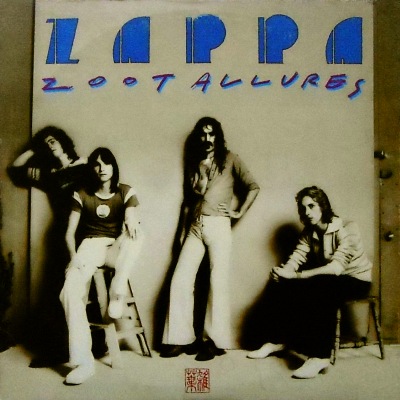
   Frank Zappa was not only the legend of progressive rock. After his early productions he was seen predominantly as avant-garde composer, fusion big bands leader and experimental movie maker. When Apostrophe and Bongo Fury became hits of progressive rock in common memory of mid 70’s he was already associated with Discreet label. This company was joint undertaking of both Zappa and manager herb Cohen. They were connected for years. With Herb Cohen who was Zappa’s manager and business partner, they run together Straight/Bizarre Records and Discreet Records. In early 1976 they parted due to disagreements on artistic ideas of Zappa and pro-corporation politics of the manager. In effect Herb Cohen took total control over Discreet label and demanded new Zappa’s albums for release. The contract was temporarily re-assigned to Warner Bros and the first of the series of Zappa's records was album Zoot Allures published in October 1976.
   It was the first and only Zappa’s record published under the Warner Bros label. And many listeners rated this album as more mainstream and popular than any of Zappa’s records before. The frame for A-Side was two songs in style of satirical rock – criticizing system of education Wind up Working in a Gas Station and Ms. Pinky. First with vocals by Davey Moire, second with Zappa lead and Roy Estrada background vocals. The impression of the popular character of the music was superficial. Second and third songs were instrumental Black Napkins beautiful guitar solo recorded in Osaka on February 1976 and Torture Never Stops which was recorded in duo by drummer Terry Bozzio and Frank Zappa playing guitar, bass, keyboards, vocal and directing recreational activities. This became a favorite song for many tours live performances and different versions have been published on various official albums and bootlegs.

Frank Zappa – Zoot Allures (1976)

   Songs filling B-side are even more specific. After Find Her Finer where Zappa and Bozzio play with Captain Beefheart’s harmonica (credited as Donnie Vliet) and background vocals of Andre Lewis, Roy Estrada and Ruben Ladron de Guevara, Frank Zappa is jamming with Terry Bozzio and Ruth Underwood in Friendly Little Finger. Next song is written by Jeff Simmons and Frank Zappa Wonderful Wino. This old song of 1970 gives the album straight connection to the Zappa’s older style. Recorded by Zappa and Bozzio in progressive way still sounds somehow familiar but it is a real good chance to observe the change. And then comes phenomenal piece opening the way to Zappa’s guitar frenzy known from Shut Up and Guitar albums. This is guitar solo Zoot Allures with Terry Bozzio on drums, Dave Parlato on bass, Ruth Underwood on marimba and Lu Ann Neil on harp. As instrumental composition Zoot Allures has indications of improvisational origins. But here it can be seen as a kind of answer for Black Napkins. The intended hit Disco Boy, has closed whole album with jester’s wry face.
   The sound of Zoot Allures is innovative and recognizable. Deeply resonating bass lines, clear guitar sound and drums tracks exploding with energy – this was the readable sign of the basic change in Zappa’s musical experiments. The lineups of his band were changing faster than recordings sessions. On front and rear side of the cover for Zoot Allures there are photos of four musicians. Frank Zappa and Terry Bozzio posed in white pants and with them the two new musicians who during recording sessions were not present yet. These two were Eddie Jobson sitting on the chair and bass player Patrick O’Hearn. Both became good support for Zappa’s band and both made lots of good music also in later bands. Zoot Allures was not immediately and not completely accepted, for many Zappa’s followers it looks too easy, but in longer time perspective this unpretentious album gives even more creative incentives than some more complex and ultimate releases.

Sunday, February 6, 2011

Zappa / Beefheart / Mothers • Bongo Fury

★★★★★

   There are many good live recordings by Frank Zappa and his bands. Definitely it is hard to count every great gig played by successive groups in the span of more than quarter of the century. And it was always a question, which one is best to take first. Almost ultimate choice is Bongo Fury, recorded in Austin, Texas May 20 and 21, 1975 and released October 2, 1975. This is album, mainly covering recordings of two concerts, that can be seen as a turning point both in Frank Zappa’s and Captain Beefheart’s career. 
   The place of the concert was quite magic. Despite its ugliness and poor acoustics, its worth to notice, the adopted old military depot, named Armadillo World Headquarters, became main music and entertainment center in Austin during the seventies. In early years it became the center of hippie culture, because of inexpensive tickets, tolerating using of the marijuana and no police raids. These freedoms established an asylum for any kind of the audience, especially for the counterculture and progressive music, but in second half of decade jazz concerts and pop music events were also located here. Conforming didn’t save the Austin’s concert center. December 31, 1980 it has closed and torn down to make place for office building of One Texas Center. 
   Zappa was playing in Armadillo not for the first time, but in 1975 it happened to be the place for the breakthrough change in Zappa’s career. It was the last time Zappa played with Mothers in its early seventies line-up with Tom Fowler on bass and George Duke on keyboard instruments. Some of them he will play again after years – Bruce Fowler came back in Broadway the Hardway and Napoleon Murphy Brock in some albums in forthcoming years, including Thing Fish where he played the role of Evil Prince. In Austin concert and main part of Bongo Fury for the first time appeared as a member of Zappa's group Terry Bozzio – long time drummer and frontline personality on numerous Zappa’s records. In two studio songs on drums was still playing Chester Thompson – drummer of last Mothers line-up featured on Roxy and Elsewhere and One Size Fits All.

Frank Zappa & Captain Beefheart - Bongo Fury (1975)

   Bongo Fury was also last time Frank Zappa and Captain Beefheart appeared together. Two great artists, personalities and friends, made outstanding performance. For Don Van Vliet it looked like trying to comeback into the mainstream of progressive music. Which itself in 1975 was on its way to change. Two songs credited as his works are in fact melodic recitations of his poems - Sam With the Showing Scalp Flat Top (ended with refrain Bongo Fury) and Man With the Woman Head. Despite this Captain Beefheart sings with great blues feeling. He is also playing saxophone and harmonica like old delta blues recordings in Smithsonian archives. 
   Even if most of pieces was composed by Zappa, Beefheart’s contribution is huge. His vocals in Debra Kadabra, one couplet in Carolina Hard-Core Extasy, phenomenal narrative singing and harmonica solo in Poofter’s Froth Wyoming Plans Ahead, and so on in every consecutive piece of this album. And there is a quite vocal personnel – singers are Frank Zappa, George Duke, Napoleon Murphy Brock and Denny Walley. But hearing the voice of Captain Beefheart in first part of Advance Romance, there can be no doubts about who is leading this spectacle. Great stage personality and outstanding artist!
   Zappa is quite out of any trend he was before or after. His solo in Carolina Hard-Core Extasy gives foretaste of next ten years of jamming documented in numerous live recordings and two huge collections of guitar solos, beginning with Shut Up And Play Yer Guitar in 1981. The Bongo Fury album shows one more time Zappa as great leader who can stand down and give place for concurrent musicians. Two studio recordings and some overdubs were recorded one year before, January and February 1974 at The Record Plant in Los Angeles. No matter what part of his work you like best, rock, orchestral, social or political satire, comedy or electronic, Bongo Fury belongs to most important albums by Frank Zappa, Captain Beefheart and musicians of the Mothers group.

Friday, December 31, 2010

Captain Beefheart – Unconditionally Guaranteed

First of two commercial albums made by Captain Beefheart for Mercury Records in 1974 was Unconditionally Guaranteed released in April 1974. With following album Bluejeans & Moonbeams, recorded in August and released in November, this pair established most criticized group of Beefheart’s works. Although main idea of this productions was to show more soft and popular picture of Beefhearts music, no commercial success has been reached by these albums. They are example of big record company’s weakness and misunderstanding cultural niche’s needs. Captain Beefheart was extremely disappointed. After album was published, he encouraged buyers to “take copies back for a refund”.  
Due to legal issues, artist didn’t have a chance to decide on his music. Made out of Captain Beefheart’s sight this album became the beginning of serious crisis in artist's biography. The era of freaking out in sixties has gone without any alternative idea. Psychedelic and surrealistic formulas has no chance to exist in main stream pop music, in developing in Europe glam rock these elements became a kind of unimportant ornament. In 1974, the year of ABBA European and world triumph, for large audience the style of sixties was obsolete and sometimes just pathetic. In later recordings Don Van Vliet came back with his school friend Frank Zappa (Bongo Fury) and signing his own name (Shiny Beast and Ice Cream for Crow), but there was no new opening. Beefheart appear more fragile than average artist in show business and unable to fight against disco and commercialization of rhythm and blues music.

Captain Beefheart – Unconditionally Guaranteed (1974) 

Even if Don Van Vliet called it “horrible and vulgar”, Unconditionally Guaranteed is almost successful compromise between radical vision of RnB and musical genres popular in 1970s. The complete set of Van Vliet’s songs could be quite impressive if they were realized more firmly, with this rhythmic precision and more determined articulation we know from his previous albums. The performing style we known from his earlier recordings had gone. And what we got, can convince, the contract with Mercury was violation of Van Vliet’s artistic personality. One look into record cover gives explanation of the mood concurrent to the creation of this record. Distance and mockery were arrays contradicting to previous Van Vliets attitude. Some men in Mercury didn't take the trouble to understand more than customers' expectations.
Question is how much Captain Beefheart was guily himself. Musicians were disappointed, the known from Trout Mask Replica, guitarist Zoot Horn Rollo and bassist Rockete Morton came out of The Magic Band. At last line up of The Magic Band was always rotating. It was Captain Beefheart who tried to hit the market and hoping to convince wider group of consumers. In effect, he lost reliance of his fans. And this makes him totally responsible for the final effect. No matter he credited his wife Jan Van Vliet and producer of the album Andy Di Martino as coauthors of all songs. In such moments one have to admit, sometimes is better to refuse than publish anything.

Monday, December 20, 2010

Captain Beefheart – Bluejeans & Moonbeams

Captain Beefheart or better we should say Don Van Vliet is the personality occupying more than one level of creative efforts not only in performing arts. He was influential person in American fine arts market. Being a child prodigy in sculpture, authoring a great bunch of recognized and highly valued works of visual arts he is known all over the world under his stage nickname Captain Beefheart. He is recognizable worldwide as bluesman, vocalist and harmonica player and the leader of his own group – The Magic Band. His records are the most radical and modern continuation of delta blues and progressive rock implementations of folk blues and roots music from American heritage. Except his avant-garde accomplishments, courageous experiments with linguistic poetry and deconstructing popular music, except he has overcame postmodern dilemmas yet in end of ’60s, sometimes he was just a pop blues singer.
Captain Beefheart came out from electric folk blues. One of  his masters was Howlin’ Wolf and this is why Beefheart’s Magic Band ’60s recordings – Safe as Milk (1967), Strictly Personal (1968) or Mirror Man (1971) sound like they were continuation of electric blues style. Some of his works, especially Trout Mask Replica (1969) sounded more like protopunk or progmetal and they were as progressive as they can be, which means they never have too many listeners. After series of radical recordings Don Van Vliet decided to issue two records in quite popular, rhythm and blues style. It’s just like he wanted to say something less comprehensive and of general meaning for people who don’t have enough nerve to listen Ella guru while keep on driving.


Captain Beefheart – Bluejeans & Moonbeams (1974)


The 1974 record Bluejeans & Moonbeams was an opportunity to show the new face of the artist, more popular and society oriented. Don Van Vliet sings and plays harmonica. The Magic Band were Dean Smith on guitar and bottleneck guitar, Ira Ingber on bass, on keyboard instruments Michael Smootherman, Mark Gibbons, Jimmy Caravan, on drums Gene Pello and on percussion instruments Ty Grimes. Also in Observatory Crest played basist Bob West and some musicians sang back vocals. Cover painting and concept author was Don’s cousin Victor Haydon, aka The Mascara Snake.
The concept of this program is close to popular rhythm and blues productions of early ’70s. Altough author of most songs was Don Van Vliet, there are two covers – Same Old Blues by J. J. Cale and Captains Holiday by The Tractors. Back vocals, soft and mild accompaniments, simple harmonics, schematic rhythm section and permanent weakness of instrumental solos makes this record little off the Beefheart's style. Some critics say it is „the worst Beefheart album” (Justin Sherill) and „you can live without this one” (Graham Johnston), but this opinions seem to be little too anachronistic. It’s good to remember this record was made in time of winding down the progressive scene. Even the greatest musicians like Frank Zappa, Robert Fripp, groups like King Crimson, Soft Machine, Pink Floyd or Yes had this time their worse moments. Some progressive musicians resigned or turn back to the straight rock. Only great personalities were able to resist and reconfigure their art to meet expectations of ambitious listeners.


*   *   *
Saturday evening, sitting in the café and talking about next year festival, I received a text message that was so urgent in its simplicity, I found it more as a kind of illusive provocative artifact. It just said „Beefheart is gone” so my friends and me, we were quite unable to understand this simple information. Maybe we were thinking, we all are dying with every minute and nobody will be eternally alive. Every obituary says more about living  itself than about those who are gone. I am aware this short remembrance says more about me, than about the artist or even his record. And I hope it is understandable, while it is not only about myself but also about whole group of my friends. Next morning I was so unsure of what happened, I took a record with the first song  of Captain Beefheart which came to my mind. It was Further than We’ve Gone – the second song from the B-side of the 1974 Virgin record Bluejeans & Moonbeams. Unexpectedly, this song revealed a quite new denotation. And this is what gives poetry its point.