Showing posts with label Ruth Underwood. Show all posts

Tuesday, March 12, 2013

Frank Zappa • Apostrophe (’)

★★★★★

   Eighteenth Frank Zappa’s album – released March 22, 1974 and almost immediately placed on hit lists – remains his greatest commercial success. It had reached 10th position on Billboard Charts and gave artist his first Gold certified by the RIAA only two years later. No wonder listeners had accepted this album – on its semantic level these songs were threaten the cultural taboo melting sexual contents with some jokes and rebel attitude. Musical layer was highly energetic, rhythmic music – from hard rock to comedy, from rhythm & blues to fusion jazz – basically in mainstream of rock fusion. And it was well done, a way much better than many seriously progressive albums. Every genre presented here was connected and interacting with lyrics context.
   The material for the album was recorded in various sessions and studios in five year period since 1969. This resulted in doubles and triples in lineups. On the cover of the record one can find names of four casts of rhythm sections from various periods – four drummers (Jim Gordon, Johnny Guerin, Aynsley Dunbar, Ralph Humphrey) and four bass players (Jack Bruce, Tom Fowler, Frank Zappa and Erroneous what stands for Alex Dmochowski). Great keyboardist George Duke, playing percussion instruments Ruth Underwood whose marimba became hallmark of Zappa’s sound in mid-seventies, two great violinists Sugar Cane Harris and Jean-Luc Ponty, two saxophonists Ian Underwood and Napoleon Murphy Brock, trumpeter Sal Marquez, trombonist Bruce Fowler, nine back-up vocals, even five sound engineers, working in New York Electric Lady Studios, Inglewood Bolic and Hollywood Paramount Studios. Zappa was credited for lead vocals, guitars, production, arrangements and struggle with.

Frank Zappa - Apostrophe (1974)

   The album has been called Apostrophe (’) or A’POS! TRO’PHE(!) as in alternative spelling used on the label. What makes this album so exceptional is fusion of RnB, pop and rock with elements of utilitarian music known from media and associated with advertising jingle style. With seditious obscenity and much inkling suggesting there’s one more mask and deeper sense of the text layer it gave the feeling of revealing the hidden truth. Maybe Frank Zappa was not considered of all these flickering senses. The title of the album came from only instrumental piece. It is an instrumental jam and the fact Zappa gave this name for the whole album may suggest he was intended to turn to more intuitive forms. Although it sounded modern and strong, from intellectual point of view it was weakest fragment of the album.
   The intellectual and philosophical backgrounds of Zappa’s lyrics were unveiled in 1993 in The Negative Dialectics of Poodle Play by Ben Watson. British author has shown Shakespeare and Platonic topics in Apostrophe (’). Brave comparison of Don’t Eat the Yellow Snow suite and King Lear is showing some parallels which are in fact archetypical values common to many cultures. Ban Watson’s dissertation is maybe first critical analysis of this album which for many reviewers was just loathsome and obscene. Zappa’s obscenity, then recognized as a part of sexual revolution, later occurred to be quite serious part of anti-establishment rebellion. His revolutionary and subversive attitude has strong impact for few generations of listeners.

Monday, December 31, 2012

Zappa in New York

★★★★★

   Live record from New York was moot point in the crisis between Frank Zappa and his manager. The imbroglio became Zappa’s victory, leading to full artistic and business independence and forming phenomenon of mature Zappa’s live performances. In December 1976, between Christmas and New Year Frank Zappa and his band had played in Palladium four shows for 14 000 listeners. In 1977 he edited some material for double LP which was released the same year in UK by DiscReet Records label. Album has been immediately withdrawn and reedited by DiscReet distributor Warner Bros. This was the moment small Zappa’s company has been losing its independence. The original idea became the part of 3CD album Läther, the project realized in 1996. Censored and shortened version of the album has been published in March 1978. Despite these manipulations album has won commercial success and in Billboard 200 albums chart Zappa in New York it took 57th position.
   Even in such form Zappa in New York was the album setting new trends. Totally renewed band was not the straight continuation of the idea of consecutive Mothers of Invention lineups. New faces were singer and guitarist Ray White, bass guitarist and singer Patrick O’Hearn and both were active in next years. From Saturday Night Live band came strong wind and brass section with Brecker brothers Randy (tp) and Mike (ts), Lou Marini (as), Ronnie Cuber (bs, cl) and Tom Malone (tb). It was like new incarnation of Hot Rats band. And musicians known from Mothers of Invention, Ruth Underwood and Terry Bozzio who was also singing, were the core of the band. Interesting member of this lineup was Eddie Jobson, singer, keyboardist and violinist, a legend of British progressive rock playing with Frank Zappa for short period only.

Zappa in New York (1978)

   Due to corporation censorship, album was shorter than usual. Side one was 11 minutes only, side two 15 minutes and side three and side four were 17 minutes each. It was easy to figure out that something was missing. Opening Titties and Beer has been shortened to 5:31 omitting long fragments of improvising dialogue with the devil played by Terry Bozzio. Another intended for this album narrative with Terry Bozzio acting one of Warner Bros. stars Punky’s Whips was excluded and published five years later, when Zappa has regained full rights to his own material. Other great narrative songs were two songs filling the entire side three – sung by Zappa satirical ballad defined as “just another love song”, Honey, Don't You Want a Man Like Me? and blues ballad The Illinois Enema Bandit, based on a true story on criminal activity of Michael H. Kenyon a great performance of Ray White opening his long stage with Frank Zappa’s bands.
   Narrative, satirical songs and even improvised sketches were always extremely popular part of Zappa’s public performances. But Zappa in New York was composed as contrasting juxtaposition of quite easy popular songs and pieces of highest complexity level. In such compositions as Manx Needs Women and Black Page Zappa was using techniques and ideas taken from serialism and other conceptions of composition. Thanks to some citations and references to masters of contemporary music like Igor Stravinsky, Edgar Varese and many others, he made outstanding chance of intellectual adventure, bridging the gap between listeners with different experiences and levels of musical knowledge. As I can say observing my friends listening to Frank Zappa’s records, this idea was quite effective way to promote language of new music.

Friday, October 26, 2012

Frank Zappa • Zoot Allures

★★★★★

   Frank Zappa was not only the legend of progressive rock. After his early productions he was seen predominantly as avant-garde composer, fusion big bands leader and experimental movie maker. When Apostrophe and Bongo Fury became hits of progressive rock in common memory of mid 70’s he was already associated with Discreet label. This company was joint undertaking of both Zappa and manager herb Cohen. They were connected for years. With Herb Cohen who was Zappa’s manager and business partner, they run together Straight/Bizarre Records and Discreet Records. In early 1976 they parted due to disagreements on artistic ideas of Zappa and pro-corporation politics of the manager. In effect Herb Cohen took total control over Discreet label and demanded new Zappa’s albums for release. The contract was temporarily re-assigned to Warner Bros and the first of the series of Zappa's records was album Zoot Allures published in October 1976.
   It was the first and only Zappa’s record published under the Warner Bros label. And many listeners rated this album as more mainstream and popular than any of Zappa’s records before. The frame for A-Side was two songs in style of satirical rock – criticizing system of education Wind up Working in a Gas Station and Ms. Pinky. First with vocals by Davey Moire, second with Zappa lead and Roy Estrada background vocals. The impression of the popular character of the music was superficial. Second and third songs were instrumental Black Napkins beautiful guitar solo recorded in Osaka on February 1976 and Torture Never Stops which was recorded in duo by drummer Terry Bozzio and Frank Zappa playing guitar, bass, keyboards, vocal and directing recreational activities. This became a favorite song for many tours live performances and different versions have been published on various official albums and bootlegs.

Frank Zappa – Zoot Allures (1976)

   Songs filling B-side are even more specific. After Find Her Finer where Zappa and Bozzio play with Captain Beefheart’s harmonica (credited as Donnie Vliet) and background vocals of Andre Lewis, Roy Estrada and Ruben Ladron de Guevara, Frank Zappa is jamming with Terry Bozzio and Ruth Underwood in Friendly Little Finger. Next song is written by Jeff Simmons and Frank Zappa Wonderful Wino. This old song of 1970 gives the album straight connection to the Zappa’s older style. Recorded by Zappa and Bozzio in progressive way still sounds somehow familiar but it is a real good chance to observe the change. And then comes phenomenal piece opening the way to Zappa’s guitar frenzy known from Shut Up and Guitar albums. This is guitar solo Zoot Allures with Terry Bozzio on drums, Dave Parlato on bass, Ruth Underwood on marimba and Lu Ann Neil on harp. As instrumental composition Zoot Allures has indications of improvisational origins. But here it can be seen as a kind of answer for Black Napkins. The intended hit Disco Boy, has closed whole album with jester’s wry face.
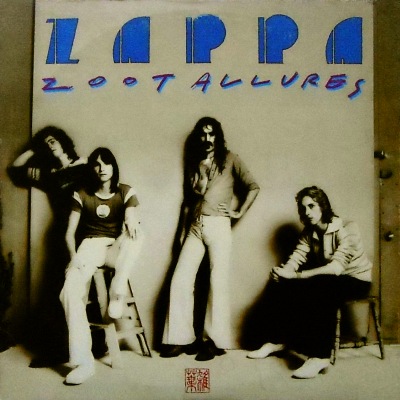
   The sound of Zoot Allures is innovative and recognizable. Deeply resonating bass lines, clear guitar sound and drums tracks exploding with energy – this was the readable sign of the basic change in Zappa’s musical experiments. The lineups of his band were changing faster than recordings sessions. On front and rear side of the cover for Zoot Allures there are photos of four musicians. Frank Zappa and Terry Bozzio posed in white pants and with them the two new musicians who during recording sessions were not present yet. These two were Eddie Jobson sitting on the chair and bass player Patrick O’Hearn. Both became good support for Zappa’s band and both made lots of good music also in later bands. Zoot Allures was not immediately and not completely accepted, for many Zappa’s followers it looks too easy, but in longer time perspective this unpretentious album gives even more creative incentives than some more complex and ultimate releases.

Friday, February 24, 2012

Frank Zappa • Sleep Dirt

★★★★★

   Four months after premiere of Studio Tan, January 19, 1979 next Zappa’s album Sleep Dirt has been released by Discreet Records (DSK 2292). For customers this looked like continuation of previous publications and maybe new series but this time Discreet Records label was totally controlled by big record company and three albums delivered to Warner Bros were treated as a legally secured debt. Zappa has treated these recordings rather as lost and not fully edited. But from today’s point of view this three albums should be treated more as the series of recordings establishing new position for composer’s creative output. In late seventies Zappa was already a well-known artist, so it was no surprise that the company has struggled with the artist to gain control over the largest possible amount of his music. In fact this became first commercial success of Zappa’s instrumental music and at Billboard’s North America Pop Albums Chart Sleep Dirt reached 175 position.
   Sound and constructive ideas of Sleep Dirt were something new, maybe not revolutionary but quite different than music dominating on earlier records. After all these albums merging satiric song, rock and fusion jazz, Zappa played some more abstract music of pure aesthetic meaning. This album has relatively fresh shape even in comparison to Studio Tan, which in fact was evolution of 200 Motels and Billy the Mountain ideas. After narrative Greggeary Peccary and two orchestral compositions from Studio Tan, second album was example of more jamming than symphonic attitude. What was the intention it's clear considering this album was titled by Zappa as Hot Rats III. Violating contract, company changed the album title. In effect program of Sleep Dirt was the cycle of instrumental works for various groups, from guitar duo with James Youman to compositions played by Mothers group with some extended sound structures developed through the multi-track recording, but not connected by title to earlier Hot Rats music. Republishing this album Zappa didn’t changed the title.

Frank Zappa – Sleep Dirt (1979)


   The meaning of the title was not clear for many listeners. Especially with the creature getting up from bed shown on Gary Panter’s cover painting. Taken from 1971 Japanese movie Godzilla vs. Hedorah, in seventies Hedorah a.k.a. “Smog monster” was symbol of pollution. It was clear reference to Zappa’s works from his first movie attempts to Cheepnis, song known from many concert events and 1974 double album Roxy and Elsewhere. In Zappa’s individual style combining pop culture artifacts and surreal imagination was one of distinctive features. Most convincing explanation of this title is an assumption that Zappa refers to popular description of excretions and contaminants gathering in the corner of an eye during sleep, also called „sleeping dirt”. This is reasonable clarification since the title track has something of a dream at the edge of sleep and wakefulness. This inspired miniature is sound simple but is organized in impressionist way, thus may evoke early 20th century music with its power of unreal expression. At the end, when sounds of accompanying guitarist James Youman has weakened Zappa asked “You getting tired?” and Youman answered “No, my fingers got stuck”.
   Material for Sleep Dirt was recorded by group of musicians in various configurations. All of them are well known from Zappa’s previous records. As always the core of the group was Frank Zappa playing guitars, keyboards, percussion instruments and programming synthesizers. His companion were playing keyboards George Duke, Ruth Underwood with variety of percussion instruments, bassists James Youman and Patrick O’Hearn and drummer Chester Thompson. This album was something distinct from the recordings for which listeners were previously accustomed.


   From opening composition Filthy Habits showing soloing Zappa with accompanying bass player Dave Parlato and drummer Terry Bozzio. In this trio Zappa was featured artist playing guitars as well as some keyboards. Strong guitar phrases over steady ostinato has its role in preparing the ground for Zappa’s improvised music which blossomed few years later on Shut Up And Play Yer Guitar triple album. In next two pieces Zappa switches to easy jazz, even piano bar style, but these are only externals. In fact Zappa was constructing this compositions from elements of jazz style, exactly the same as he was doing in his debut album.
   Patrick O’Hearn played perfectly musical bass parts in Flambay and Spider of Destiny and this was beginning of his fruitful collaboration with Zappa. In fact he was not new on music scene, after private studies with Garry Peacock he was playing in San Francisco jazz groups with best artists - Charles Lloyd, Joe Henderson, Dexter Gordon, Joe Pass, Woody Shaw, Eddie Henderson, and Bobby Hutcherson. His bass has great jazzy sound, perfect articulation and was recognizable for his own style. He has his own contribution to the success of Shut Up And Play Yer Guitar. It’s easy to find the foretaste of this work in the closing composition of Sleep Dirt album The Ocean Is the Ultimate Solution were Zappa shows with Patrick O’Hearn playing bass and Terry Bozzio playing drums. In Zappa’s intention this was probably an answer for Filthy Habits, but this time it’s much more than jamming. Whole piece sounds perfectly different – unless first trio was rock, this is jazz.
   This recording was republished in 1991 with drums overdubs by Chad Wackerman and some instrumentation changes. Songs Flambay, Spider of Destiny and Time is Money were originally composed for abandoned 1972 musical Hunchentoot. Digital versions of this songs had been enriched by vocals by Thana Harris. Although well written and perfectly performed, for many listeners this version was just surprise. Once more Zappa’s works occurred beyond the boundaries of fashion and style.

Saturday, February 18, 2012

Frank Zappa • Studio Tan

★★★★★

   After splitting with manager and long-time associate Herb Cohen, Zappa signed a contract with Warner Bros. Soon it became clear that this company also treats Zappa with the superiority of ownership, as yet another star on their already considerable constellation. After Warner Bros pressed for changes in Zoot Allures which was primarily intended as double LP album and then rejected Läther project. In short time list of corporation abusive decisions was long sufficiently to make artist quit. But the company used legal tricks to demand four additional albums. This may be the cause Zappa lost his heart to the greatest projects of mid-seventies. As a result of censorship imposed by the label, full versions of Zappa’s records saw daylight after years, Zappa in New York on double CD in 1991 and Läther on triple CD after artist’s death in September 1996. Zappa delivered recordings demanded by the company. Tapes with recordings did not contain complete information, what made the three albums released by Warner Bros appeared with no cooperation from artist side.
   Three albums Warner Bros decided to release under Discreet label is a series made against artist will, regardless or maybe even malice. First album was Studio Tan, released September 15, 1978. Cover including only information on tittles was decorated with painting by Gary Panter – this cover, just like next two projects for the records Sleep Dirt and Orchestral Favorites was next cause of resentment. And although Zappa didn’t accepted this works, he decided to publish them as covers to CD edition. Zappa was deceived and wounded pride did not allow him to work, even if the price was losing control on some of his best compositions, but that’s another story.

Frank Zappa – Studio Tan (1978)


   The reasonable attitude is to formulate a different question, why the record company did not try to communicate with the artist to achieve adequate quality of his recordings publication. Position of company clerks can be explained only by hostility of decision makers. Greggery Peccary filling Side A of the record has been brutally faded out. Thanks to full version published in 1991 as The Adventures of Greggery Peccary by Barking Pumpkin Records it’s easy to find, fading this work just few bars before the end was completely unjustified. The removal of the final part from this piece ruined its formal stability. But what do you expect from people who have rejected one of the major projects of the seventies progressive rock.
   Material appeared in Studio Tan was intended as a part of Läther album where it has been included 18 years later. This four compositions were recorded in various moments by musicians who worked with Zappa in previous years, but core team was Mothers of Invention lineup featuring Frank Zappa singing and playing with George Duke, Tom Fowler, Chester Thompson and Ruth Underwood. Whole staff had over 30 musicians and some of them played in Zappa’s bands during tours in past years and many were just studio musicians. Absolutely unique artist, first one in the group of four trombonists, Bruce Fowler is known from more lineups and numerous recordings with Frank Zappa (since Over-Nite Sensation in 1973) and Captain Beefheart (since Shiny Beast in 1978) and many others jazz and progressive bands in over forty years of artistic activity. Some artists were famous for different kind of musical activity, like Don Brewer, the drummer of Grand Funk Railroad, who in Let me take you to the beach played bongos and like Emil Richards who was famous from fifties percussionist and member of both lineups of Abnuceals Emuukha Electric Symphony Orchestra.
   Text of this dramatic work continues satirical style of older compositions. Frank Zappa since his protest songs in the sixties has the clear tendency to comment the political and social realities. This attitude blossomed with both satirical and serious artistic expressions. In sixties and eighties he was more specific in his criticism, while in seventies his works were dominated by surreal sense of humor. This character corresponds with instrumental works from Side B - Revised Music For Guitar & Low Budget Orchestra and REDUNZL – somehow ironically undermining too serious style of progressive music in late seventies. This was also characteristic feature of instrumental tracks provided on the next two albums ending story of Discreet Records.