Showing posts with label Frank Zappa. Show all posts

Wednesday, September 30, 2015

Captain Beefheart and his Magic Band • Trout Mask Replica

★★★★★

   As Frank Zappa mentioned in his Real Book, under the ground of California rock scene in sixties, there was many independent musicians driven by ideas of progress and creative spirit. About many of them nobody remembers, but those who were putting their creative contribution in next decades, are now recognized as classics of California scene. Musicians and sound technicians led experiments with new sound and formal elements, trying to invent new possibilities of expression. One of most famous was Don Van Vliet known as Captain Beefheart who was combining raw blues vocal techniques with blues and rock, to create his unique vision of music. It wasn’t rock, although in 1980’s some authors were trying to place Captain Beefheart’s music in proto punk context. It wasn’t even blues, even if he made some efforts to make us think so. This music was his own mixture of avant-garde, blues, modern jazz and rock with citations from popular culture and artistic music, so probably progressive rock is most appropriate category.
   The problem with categorization of Captain Beefheart music is its changeability. He was using some different idioms giving some chances for various interpretations. Most complex and artisticly independent is Captain Beefheart’s third  album. In August 1968 and March 1969 Captain Beefheart recorded material for double LP album produced by his friend Frank Zappa. Released June 16, 1969 album Trout Mask Replica is absolutely the one of crowning moments in history of both progressive rock and experimental music. Whole musical material was created and rehearsed in one year period. Album has benn produced by Frank Zappa and published under Straight Records label being companion to Bizarre Records, the pair of companies for publishing more mainstream or more experimental musical projects. In fact Trout Mask Replica, although published by Straight Records, remains most unusual and un-straight album in both collections.

Captain Beefheart and his Magic Band — Trout Mask Replica (1969)

   The raw sound of and complex rhythmic patterns are most characteristic elements spanning to whole material of this album. Although in 1969, during recording Trout Mask Replica album raw sound was Captain Beefheart’s hallmark, this was first time when production was precisely connected with musical contents. In some parts minimalistic effects and atonality, in others folk blues and free jazz ideas interlock in multidimensional fabric. The precision of this band was legendary in next decades until digital recording technologies made possible similar effects. Most of these elements and ideas in 1969 were not new, but its combination was definitely fresh and for many listeners just shocking. This was time of dividing rock music into more popular, commercial popular music and progressive trends with plenty of formal ideas. As Frank Zappa proposed Captain Beefheart possibility of recording album with complete artistic freedom, this album become perfect example of expanding frontiers of rock and blues-rock genre.
   As a project of Captain Beefheart this was most ambitious and consequent undertaking. The line-up of The Magic Band was refreshed, all musicians’ names were replaced with nicknames. Drummer John French was called Drumbo, guitarist Jeff Cotton was covered under pseudonym Antennae Jimmy Semens, guitarist Bill Harkleroad was noted as Zoot Horn Rollo, playing bass guitar Mark Boston was under name Rockette Morton, and cousin of the leader, bass clarinetist Victor Hayden was The Mascara Snake. This unconventional way of presenting the band was consequence of earlier trend which result was nickname Captain Beefheart Don Van Vliet owed to Frank Zappa. Many uncredited musicians were taken from Zappa’s band Mothers of Invention, bass guitarist Roy Estrada, pianist Don Preston, saxophonists Ian Underwood and Bunk Gardner, trumpet player Buzz Gardner. Zappa himself is heard as speaking voice of engineer, but he was uncredited as engineer neither. Five stars with no redundant comments.

Sunday, June 7, 2015

The Mothers • Fillmore East – June 1971

★★★★
✰✰✰✰✰

   Exploring the development of Frank Zappa’s creative activities, we need to consider its social factor. He was always emphasized how much he likes “audience participation”, and it was audible since first concerts and improvised happenings through his famous testimony on rock lyrics moral content before the committee of US Congress in September 1985 and later political statements, to his last and unfortunately unfinished 1988 tour and to his late interviews. Crucial moment is to understand the role concerts were playing as element of social experience. The source of his power as composer, text author, guitarist and personality was his understanding of cultural and social mechanisms and sincere way he was communicating common sense point of view. It is fascinating to observe how his eccentricity was becoming more and more understandable and his views were shared by an increasing part of the audience.
   In seventies, as almost always before, concerts were still the primary way musicians earn for living. The same was with The Mothers of Invention. After dense sequence of concerts in last decade of May when Zappa's band was playing in Chicago IL (21st), Delaware OH (22nd), Columbus OH (23rd), Detroit MI (25th), Madison WI (27th), Rochester MI (29th) and Cleveland OH (30th), June was more loose. Two concerts in Pennsylvania (Pittsburgh June 2nd and Harrisburg 3rd) and four concerts in two days in New York were the end of sequence started in May. In first decade of July Zappa with his band were touring in Canada giving again 7 gigs in 9 days. The two day of Fillmore East concerts in June 5th and 6th, with two gigs every day, became heyday of summer 1971 in Frank Zappa and Mothers of Invention career. Songs and concert dialogs recorded these days in Fillmore East became twelfth album in Frank Zappa discography and his first live album, setting new direction in publishing live recordings. 

The Mothers – Fillmore East – June 1971 (1971)

   This is not just live recording album. Edited out of four gigs Zappa and Mothers of Invention played in New York Fillmore East during two days, this set of songs follow show’s main theme, which was explicit relation of legendary excesses with the participation of musicians from Vanilla Fudge and Led Zeppelin. Strange sexual behavior of rock musicians was the part of rock culture mythology and the element of many urban legends. The alleged story took place in Edgewater Inn in Seattle, where guests were fishing directly from apartments’ windows. The relation focused on story of a groupie and her experience with the fish was shown in The Mud Shark which is a narrative episode connected to live interaction with the audience. This was the second presentation of live performance by Mark Volman and Howard Kaylan who were already singing in Chunga’s Revenge. Other songs are full of situation and vocabulary references and this improvised entertaining jokes give the album cohesion as a continuation of Zappa’s conception-albums with clear narrative aspect and some random reactions.
   Although this is live album, its musical quality is far ahead of its time. Zappa’s compositions are perfectly set and beautiful instrumental Peaches En Regalia became his trademark. This album is signed by The Mothers and Zappa alone is visible on credits as musician, composer, leader of the band and producer of the record. But nobody had any doubts, this was next album in his discography. New lineup of The Mothers consists of vocal duo Mark Volman and Howard Kaylan from The Turtles, playing wind instruments and keyboards Ian Underwood, Bob Harris as a second keyboard player, drummer Aynsley Dunbar and bassist Jim Pons, former member of The Turtles who just started his cooperation with The Mothers. The guest performer was Don Preston playing minimoog, a veteran of first Mothers of Invention and one of most interesting musicians playing with Zappa. This was rather small companion for Zappa’s symphonic ideas of this period. The same minimalistic attitude can be seen of the cover designed by Cal Schenkel. But the economic lineup shows its power when listening to these fragments of live music. Especially vocals and dialogue fragments show new face of the band. This was already in use while recording 200 Motels in January 1971, but this album was released in October 4th, 1971, two months after Fillmore East – June 1971. Four stars looks quite fair, but we can be sure for Zappa fans this one, as well as almost every other Zappa’s record is always worth five.

Sunday, December 21, 2014

Frank Zappa • Freak Out!

X CONGRESS OF ZAPPOLOGY – OLSZTYN DEC 20th, 2014

★★★★★

   Frank Zappa’s debut album turned out to be a breakthrough determining the direction of popular music development in late 1960’s as well as in next decades. In the years prior to the recording sessions, Zappa wrote some music for the movies with Run Home Slow soundtrack. He was also the author of several musical experiments, sometimes promising but never successful. What has not brought him recognition became creative workshop. Anyway, steeped in rhythm-and-blues and anarchistic freaks cultural movement, young artist never dreamed to become a star of popular music. His ambition from the very beginning was to be a “serious” composer. In fact this was the purpose from the moment Zappa as a 14-year-old bought his first album with music by Edgar Varese.
   When MGM Records signed a contract producers were convinced that this is just one more rhythm and blues band singing easy-digestible, unsophisticated songs. The recordings were made at the turn of 1965 and 1966. As managers had expected, recorded material included a number of tracks resembling contemporary pop songs. Tracks like Wowie Zowie or You Didn’t Try to Call Me might actually appear on many other albums recorded at this time. Some songs, like I Aint Got No Heart or Go Cry On Somebody Else's Shoulder though thematically linked to the popular sentimental songs, in fact, were a perverse mockery of their style. Zappa in his songs even ridiculed the mother’s love, however, it was part of artistic vision of social problems. What's more, he was able to enter into the manufacturer's requirements enough part of his own vision to make the album instantly famous. Production which, according to the manager “had no commercial potential”, soon became a legend.

Frank Zappa & Mothers of Invention – Freak Out! (1966)

   Even if album title Freak Out! was suggesting something different, there were many serious texts on double LP. The very first song starts with apostrophe “Mr. America, walk on by your schools that do not teach / Mr. America, walk on by the minds that won't be reached / Mr. America try to hide the emptiness that's you inside”. In the third song when the value and durability of reality is questioned, as the chorus returns the question: “Who are the brain police?” – this way social criticism packed in naive melodies and ironic sentimentality distinct from standard hippie hits. But this was the result of a compromise between Zappa’s ambitions and expectations of managers.
   Luckily he succeeded in persuading MGM Records to produce the double album. The second disc contains three songs that were not songs anymore. The first of them, Trouble Every Day is maintained in the nervous rhythm description of social media and the political reality of the sixties. Last two pieces are avant-garde compositions: Help, I'm a Rock (Suite in Three Movements – Okay to Tap Dance, In Memoriam, Edgard Varèse, It Can't Happen Here) and The Return of the Son of Monster Magnet (Unfinished Ballet in Two Tableaux – I. Ritual Dance of the Child-Killer, II. Nullis Pretii – “No Commercial Potential”). Both are minimalistic constructions, based on the motoric rhythms, precussion effects and vocal manipulations with lots of improvised material. And needless to say it was possibly here, where Zappa’s experimenting pays its debts.


Frank Zappa – Help I'm a Rock (1966)

   The first Frank Zappa’s album signed as band The Mothers of Invention became a turning point in the history of popular culture. First of all, it has changed the approach to the musical forms of rock which has greatly contributed to development of progressive rock. Freak Out! broke the customary standards of the record companies. While concert music and jazz for years were setting their own standards, the popular music was recorded in the mid-sixties still using a simple rule: on the beginning of both sides were placed radio or single hits and every side was filled with a few songs more. No one had ever worried too much if songs were connected in any reasonable statement. These principles were used in all styles of popular music from country, through pop, to rhythm and blues, soul and rock. And Frank Zappa released some fresh ideas in music business.
   Soon after June 27th 1966 when Freak Out! was published, concept albums and more or less conceptual double albums with improvisations and experimental fragments of rock performers begin to appear. The time was high, four months after Freak Out! The Kinks released Face to Face (October 1966), in December 1966 The Beatles begin recording sessions to Sgt. Pepper's Lonely Hearts Club Band and in October 1968 were released In the Court of the Crimson King by King Crimson and Ummagumma by Pink Floyd. The cover of Zappa’s first album was part of artistic vision associated with its content too. Also this was beyond the standards of record production. Freak Out! was the beginning of the revolution, which in a few years has changed the image of music for decades. Absolute full scale five stars for the album, the music and the value.

Sunday, April 28, 2013

Frank Zappa • Uncle Meat

★★★★★

   After the students' revolt in late 60’s, many hidden issues in politics, education, economics and social life came to light. The necessity of rebuilding some elements of culture became apparent. Some processes of fighting against injustice, segregation or unequal rights were taking place for decades; in sixties moving towards civil rights and social liberation were already quite well underway. With great expectations for the future, artists were trying to free social memory of cold war propaganda and imperial ideology. This was the perfect time to show the world the mirror and even most advanced artistic experiments were absorbed by more and more open society. But even then many noble idealists were unreasonably hopeful, escaping into naïve expectations, and the tragic existence on the edge was a final argument protecting them against absurdity.
   Frank Zappa was clearheaded rationalist from his very beginnings. He started with dual musical creation, from one side there was fusion music with some concepts of avant-garde compositions, elements of jazz, and from the other side with songs about popular culture being more sardonic than satirical or critical. Sometimes he was more composer, sometimes more lyricist and songwriter, sometimes just performer. His shows with Mothers of Invention became famous. One of most complex work were his musical movie projects giving him grounds for joining different musical elements and traditions. It is best feature of early Zappa’s works he was enough complex to be inspiring from every point of view. He was acting as a romantic composer using folk tunes and motifs to build advanced constructions, so he was using popular music and many other genres and artifacts to create his own, original, yet somehow decadent vision.

Frank Zappa & Mothers of Invention – Uncle Meat (1969)

   The sixth Frank Zappa album Uncle Meat was copyrighted in 1968 and released in March 1969. Surprisingly this album was selling much better than many other records with big “commercial potential” and Uncle Meat in short time reached the peak on 43rd position of US album chart. This was probably due to good reception of previous albums but in fact this double LP issue was perfectly produced and seemingly more indiscrete while heterogenic and complex. Under the title Uncle Meat printed with Old English typeface there was a subtitle stated: Most of the music from The Mother’s movie of the same name which we haven’t got enough money to finish yet. The material made for the movie Uncle Meat was reedited as a documentary in kind “making of” and published on videocassette in 1987. Also a CD edition was augmented with more than forty minutes of soundtrack excerpts (predominantly dialogues) and song Tengo Na Minchia Tanta recorded in 1982 with singer Massimo Bassoli.
   The original idea of Uncle Meat album looks as the perfect bunch of various ambitions. Sometime surrealistic lyrics were more readable in era of psychedelic rock but all spoken fragments were clearly taken from movie soundtrack. Experiments with tape, percussion and noise, modal scales and complex rhythms, multitrack recording, these entire elements make some fragments of this album can be quite a challenge for listeners with prejudices. What was avant-garde in sixties, today sounds as classical, well balanced concert music. Original and creative combination of traditional instruments and electronics, complex structures developed from simple melodic motifs, resignation of diatonic function in harmonics and the use of techniques of serialism, all this make the music of the Uncle Meat album one of most interesting documents of its time. Without fail it should be regarded as a serious composition. This is why the original album deserves five out of five stars.

Tuesday, March 12, 2013

Frank Zappa • Apostrophe (’)

★★★★★

   Eighteenth Frank Zappa’s album – released March 22, 1974 and almost immediately placed on hit lists – remains his greatest commercial success. It had reached 10th position on Billboard Charts and gave artist his first Gold certified by the RIAA only two years later. No wonder listeners had accepted this album – on its semantic level these songs were threaten the cultural taboo melting sexual contents with some jokes and rebel attitude. Musical layer was highly energetic, rhythmic music – from hard rock to comedy, from rhythm & blues to fusion jazz – basically in mainstream of rock fusion. And it was well done, a way much better than many seriously progressive albums. Every genre presented here was connected and interacting with lyrics context.
   The material for the album was recorded in various sessions and studios in five year period since 1969. This resulted in doubles and triples in lineups. On the cover of the record one can find names of four casts of rhythm sections from various periods – four drummers (Jim Gordon, Johnny Guerin, Aynsley Dunbar, Ralph Humphrey) and four bass players (Jack Bruce, Tom Fowler, Frank Zappa and Erroneous what stands for Alex Dmochowski). Great keyboardist George Duke, playing percussion instruments Ruth Underwood whose marimba became hallmark of Zappa’s sound in mid-seventies, two great violinists Sugar Cane Harris and Jean-Luc Ponty, two saxophonists Ian Underwood and Napoleon Murphy Brock, trumpeter Sal Marquez, trombonist Bruce Fowler, nine back-up vocals, even five sound engineers, working in New York Electric Lady Studios, Inglewood Bolic and Hollywood Paramount Studios. Zappa was credited for lead vocals, guitars, production, arrangements and struggle with.

Frank Zappa - Apostrophe (1974)

   The album has been called Apostrophe (’) or A’POS! TRO’PHE(!) as in alternative spelling used on the label. What makes this album so exceptional is fusion of RnB, pop and rock with elements of utilitarian music known from media and associated with advertising jingle style. With seditious obscenity and much inkling suggesting there’s one more mask and deeper sense of the text layer it gave the feeling of revealing the hidden truth. Maybe Frank Zappa was not considered of all these flickering senses. The title of the album came from only instrumental piece. It is an instrumental jam and the fact Zappa gave this name for the whole album may suggest he was intended to turn to more intuitive forms. Although it sounded modern and strong, from intellectual point of view it was weakest fragment of the album.
   The intellectual and philosophical backgrounds of Zappa’s lyrics were unveiled in 1993 in The Negative Dialectics of Poodle Play by Ben Watson. British author has shown Shakespeare and Platonic topics in Apostrophe (’). Brave comparison of Don’t Eat the Yellow Snow suite and King Lear is showing some parallels which are in fact archetypical values common to many cultures. Ban Watson’s dissertation is maybe first critical analysis of this album which for many reviewers was just loathsome and obscene. Zappa’s obscenity, then recognized as a part of sexual revolution, later occurred to be quite serious part of anti-establishment rebellion. His revolutionary and subversive attitude has strong impact for few generations of listeners.

Monday, December 31, 2012

Zappa in New York

★★★★★

   Live record from New York was moot point in the crisis between Frank Zappa and his manager. The imbroglio became Zappa’s victory, leading to full artistic and business independence and forming phenomenon of mature Zappa’s live performances. In December 1976, between Christmas and New Year Frank Zappa and his band had played in Palladium four shows for 14 000 listeners. In 1977 he edited some material for double LP which was released the same year in UK by DiscReet Records label. Album has been immediately withdrawn and reedited by DiscReet distributor Warner Bros. This was the moment small Zappa’s company has been losing its independence. The original idea became the part of 3CD album Läther, the project realized in 1996. Censored and shortened version of the album has been published in March 1978. Despite these manipulations album has won commercial success and in Billboard 200 albums chart Zappa in New York it took 57th position.
   Even in such form Zappa in New York was the album setting new trends. Totally renewed band was not the straight continuation of the idea of consecutive Mothers of Invention lineups. New faces were singer and guitarist Ray White, bass guitarist and singer Patrick O’Hearn and both were active in next years. From Saturday Night Live band came strong wind and brass section with Brecker brothers Randy (tp) and Mike (ts), Lou Marini (as), Ronnie Cuber (bs, cl) and Tom Malone (tb). It was like new incarnation of Hot Rats band. And musicians known from Mothers of Invention, Ruth Underwood and Terry Bozzio who was also singing, were the core of the band. Interesting member of this lineup was Eddie Jobson, singer, keyboardist and violinist, a legend of British progressive rock playing with Frank Zappa for short period only.

Zappa in New York (1978)

   Due to corporation censorship, album was shorter than usual. Side one was 11 minutes only, side two 15 minutes and side three and side four were 17 minutes each. It was easy to figure out that something was missing. Opening Titties and Beer has been shortened to 5:31 omitting long fragments of improvising dialogue with the devil played by Terry Bozzio. Another intended for this album narrative with Terry Bozzio acting one of Warner Bros. stars Punky’s Whips was excluded and published five years later, when Zappa has regained full rights to his own material. Other great narrative songs were two songs filling the entire side three – sung by Zappa satirical ballad defined as “just another love song”, Honey, Don't You Want a Man Like Me? and blues ballad The Illinois Enema Bandit, based on a true story on criminal activity of Michael H. Kenyon a great performance of Ray White opening his long stage with Frank Zappa’s bands.
   Narrative, satirical songs and even improvised sketches were always extremely popular part of Zappa’s public performances. But Zappa in New York was composed as contrasting juxtaposition of quite easy popular songs and pieces of highest complexity level. In such compositions as Manx Needs Women and Black Page Zappa was using techniques and ideas taken from serialism and other conceptions of composition. Thanks to some citations and references to masters of contemporary music like Igor Stravinsky, Edgar Varese and many others, he made outstanding chance of intellectual adventure, bridging the gap between listeners with different experiences and levels of musical knowledge. As I can say observing my friends listening to Frank Zappa’s records, this idea was quite effective way to promote language of new music.

Friday, October 26, 2012

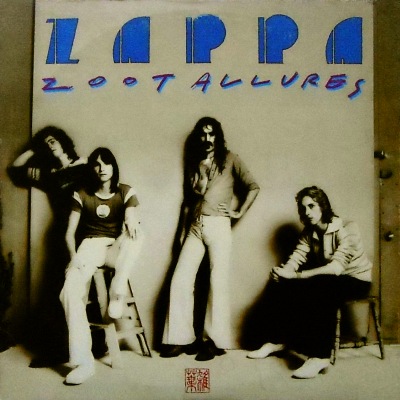
Frank Zappa • Zoot Allures

★★★★★

   Frank Zappa was not only the legend of progressive rock. After his early productions he was seen predominantly as avant-garde composer, fusion big bands leader and experimental movie maker. When Apostrophe and Bongo Fury became hits of progressive rock in common memory of mid 70’s he was already associated with Discreet label. This company was joint undertaking of both Zappa and manager herb Cohen. They were connected for years. With Herb Cohen who was Zappa’s manager and business partner, they run together Straight/Bizarre Records and Discreet Records. In early 1976 they parted due to disagreements on artistic ideas of Zappa and pro-corporation politics of the manager. In effect Herb Cohen took total control over Discreet label and demanded new Zappa’s albums for release. The contract was temporarily re-assigned to Warner Bros and the first of the series of Zappa's records was album Zoot Allures published in October 1976.
   It was the first and only Zappa’s record published under the Warner Bros label. And many listeners rated this album as more mainstream and popular than any of Zappa’s records before. The frame for A-Side was two songs in style of satirical rock – criticizing system of education Wind up Working in a Gas Station and Ms. Pinky. First with vocals by Davey Moire, second with Zappa lead and Roy Estrada background vocals. The impression of the popular character of the music was superficial. Second and third songs were instrumental Black Napkins beautiful guitar solo recorded in Osaka on February 1976 and Torture Never Stops which was recorded in duo by drummer Terry Bozzio and Frank Zappa playing guitar, bass, keyboards, vocal and directing recreational activities. This became a favorite song for many tours live performances and different versions have been published on various official albums and bootlegs.

Frank Zappa – Zoot Allures (1976)

   Songs filling B-side are even more specific. After Find Her Finer where Zappa and Bozzio play with Captain Beefheart’s harmonica (credited as Donnie Vliet) and background vocals of Andre Lewis, Roy Estrada and Ruben Ladron de Guevara, Frank Zappa is jamming with Terry Bozzio and Ruth Underwood in Friendly Little Finger. Next song is written by Jeff Simmons and Frank Zappa Wonderful Wino. This old song of 1970 gives the album straight connection to the Zappa’s older style. Recorded by Zappa and Bozzio in progressive way still sounds somehow familiar but it is a real good chance to observe the change. And then comes phenomenal piece opening the way to Zappa’s guitar frenzy known from Shut Up and Guitar albums. This is guitar solo Zoot Allures with Terry Bozzio on drums, Dave Parlato on bass, Ruth Underwood on marimba and Lu Ann Neil on harp. As instrumental composition Zoot Allures has indications of improvisational origins. But here it can be seen as a kind of answer for Black Napkins. The intended hit Disco Boy, has closed whole album with jester’s wry face.
   The sound of Zoot Allures is innovative and recognizable. Deeply resonating bass lines, clear guitar sound and drums tracks exploding with energy – this was the readable sign of the basic change in Zappa’s musical experiments. The lineups of his band were changing faster than recordings sessions. On front and rear side of the cover for Zoot Allures there are photos of four musicians. Frank Zappa and Terry Bozzio posed in white pants and with them the two new musicians who during recording sessions were not present yet. These two were Eddie Jobson sitting on the chair and bass player Patrick O’Hearn. Both became good support for Zappa’s band and both made lots of good music also in later bands. Zoot Allures was not immediately and not completely accepted, for many Zappa’s followers it looks too easy, but in longer time perspective this unpretentious album gives even more creative incentives than some more complex and ultimate releases.

Wednesday, March 7, 2012

Frank Zappa • Orchestral Favorites

★★★★★

   The 1979 with five new albums was record year in Frank Zappa’s discography. Warner Bros. has released two further albums from material provided by Zappa as a consequence of a contract – Sleep Dirt in January and Orchestral Favorites in May. And in March launching new label, Zappa Records opened with Sheik Yerbouti double album and continued in September and November with two albums of Joe’s Garage Act I and double Joe’s Garage Act II & III. This year was also record for the number of three singles – Dancing Fool, Bobby Brown Goes Down and Joe’s Garage. Every 1979 album is different in style which is one of great features of Zappa’s works. Publication of two albums with instrumental music proved to be fortunate event. The 1979 edition was published by Warner Bros under DiscReet label without permission from the author. And even with the tracks which had not been edited, issued hastily and without the participation of artists, the compositions are able to defend itself.
   Material for this album was recorded in Royce Hall, Los Angeles in September 1975 with large group of more than three dozen artists. The core of the orchestra were Terry Bozzio on drums, Dave Parlato on bass, Emil Richards playing percussions and playing guitar and keyboards Frank Zappa who was leader, composer and producer. Many musicians involved in this project were known as members of Abnuceals Emuukha Electric Symphony Orchestra & Chorus from Lumpy Gravy album. Zappologists separate the existence of this bands as – first Lumpy Gravy 1967 incarnation and second Orchestral Favorites 1975 incarnation. Many musicians were hired just for September 17 and 18, 1975 concerts in Royce Hall.  From 1967’ AEESOC incarnation there were keyboardist Mike Lang, playing french horn David Duke, cellist Jerry Kessler and percussionist Emil Richards. Some musicians came to Zappa’s bands after Lumpy Gravy. From The Grand Wazoo trumpeter Malcolm McNabb, oboist Earle Dumler, flutist, clarinetist and saxophonist Mike Altschul, from latest Mothers lineup Bruce Fawler, Terry Bozzio. New musicians in AEESOC were John Wittenberg, Bobby Dubow (violin) Pamela Goldsmith (viola), Dana Hughes (bass trombone), Ray Reed (flute), David Shostak (flute) and Tommy Morgan (harmonica). The conductors of the orchestra in Royce concerts were Frank Zappa and Michael Zearott.

Frank Zappa – Orchestral Favorites (1979)

   First and last works are instrumental versions of 200 Motels compositions. Opening A-Side Strictly Genteel was published as vocal finale of 1971 soundtrack and later in orchestral form with London Symphony Orchestra and in rock band version from October 31, 1981 concert in Palladium, NYC on You Can’t Do That On Stage Anymore vol. 6. Next two compositions were new works and like many other were later reworked and republished – Pedro’s Dowry in January 1983 recorded London Symphony Orchestra conducted by Kent Nagano and Naval Aviation in Art in January 1984 recorded Ensemble Intercontemporain conducted by Pierre Boulez.
   Opening B-Side Duke of Prunes later known as The Orchestral Duke of Prunes is instrumental version of 1966 song published on Absolutely Free and Mothermania albums. Zappa called it „surrealistic love song” and this tune was frequently played during Mothers of Invention gigs in sixties. The last piece of this set Bogus Pomp comes from 1968 whet it was played as a prologue to the concert on October 25. The musical material of this composition was base for Sealed Tuna Sandwich suite in 200 Motels soundtrack and then reworked and published as Bogus Pomp on Orchestral Favorites (13:29) and in much wider form on London Symphony Orchestra album (24:31).
Closing series of three Warner Bros’ editions, the Orchestral Favorites album was a kind of conclusion for this exposure. Three records giving balanced picture of Zappa’s creative works with very little rock songs, well developed narrative work and various instrumental compositions pointing directions of future developments. Many evil can be said about the policies of big corporations towards artists. Many talented people never fully developed their talents. Frank Zappa had a sufficiently strong position to fight for freedom of his artistic expression. Reduced to the status of the product, art defended itself once more. This series was like cuckoo egg in the nest of corporative governance, a formation of independent post in the world of supermarkets. It was in fact enough anti-system to provoke a series of furious attacks of the Washington generals' wives so much politically involved in the coming era of Reaganite neo-conservatism.

Friday, February 24, 2012

Frank Zappa • Sleep Dirt

★★★★★

   Four months after premiere of Studio Tan, January 19, 1979 next Zappa’s album Sleep Dirt has been released by Discreet Records (DSK 2292). For customers this looked like continuation of previous publications and maybe new series but this time Discreet Records label was totally controlled by big record company and three albums delivered to Warner Bros were treated as a legally secured debt. Zappa has treated these recordings rather as lost and not fully edited. But from today’s point of view this three albums should be treated more as the series of recordings establishing new position for composer’s creative output. In late seventies Zappa was already a well-known artist, so it was no surprise that the company has struggled with the artist to gain control over the largest possible amount of his music. In fact this became first commercial success of Zappa’s instrumental music and at Billboard’s North America Pop Albums Chart Sleep Dirt reached 175 position.
   Sound and constructive ideas of Sleep Dirt were something new, maybe not revolutionary but quite different than music dominating on earlier records. After all these albums merging satiric song, rock and fusion jazz, Zappa played some more abstract music of pure aesthetic meaning. This album has relatively fresh shape even in comparison to Studio Tan, which in fact was evolution of 200 Motels and Billy the Mountain ideas. After narrative Greggeary Peccary and two orchestral compositions from Studio Tan, second album was example of more jamming than symphonic attitude. What was the intention it's clear considering this album was titled by Zappa as Hot Rats III. Violating contract, company changed the album title. In effect program of Sleep Dirt was the cycle of instrumental works for various groups, from guitar duo with James Youman to compositions played by Mothers group with some extended sound structures developed through the multi-track recording, but not connected by title to earlier Hot Rats music. Republishing this album Zappa didn’t changed the title.

Frank Zappa – Sleep Dirt (1979)


   The meaning of the title was not clear for many listeners. Especially with the creature getting up from bed shown on Gary Panter’s cover painting. Taken from 1971 Japanese movie Godzilla vs. Hedorah, in seventies Hedorah a.k.a. “Smog monster” was symbol of pollution. It was clear reference to Zappa’s works from his first movie attempts to Cheepnis, song known from many concert events and 1974 double album Roxy and Elsewhere. In Zappa’s individual style combining pop culture artifacts and surreal imagination was one of distinctive features. Most convincing explanation of this title is an assumption that Zappa refers to popular description of excretions and contaminants gathering in the corner of an eye during sleep, also called „sleeping dirt”. This is reasonable clarification since the title track has something of a dream at the edge of sleep and wakefulness. This inspired miniature is sound simple but is organized in impressionist way, thus may evoke early 20th century music with its power of unreal expression. At the end, when sounds of accompanying guitarist James Youman has weakened Zappa asked “You getting tired?” and Youman answered “No, my fingers got stuck”.
   Material for Sleep Dirt was recorded by group of musicians in various configurations. All of them are well known from Zappa’s previous records. As always the core of the group was Frank Zappa playing guitars, keyboards, percussion instruments and programming synthesizers. His companion were playing keyboards George Duke, Ruth Underwood with variety of percussion instruments, bassists James Youman and Patrick O’Hearn and drummer Chester Thompson. This album was something distinct from the recordings for which listeners were previously accustomed.


   From opening composition Filthy Habits showing soloing Zappa with accompanying bass player Dave Parlato and drummer Terry Bozzio. In this trio Zappa was featured artist playing guitars as well as some keyboards. Strong guitar phrases over steady ostinato has its role in preparing the ground for Zappa’s improvised music which blossomed few years later on Shut Up And Play Yer Guitar triple album. In next two pieces Zappa switches to easy jazz, even piano bar style, but these are only externals. In fact Zappa was constructing this compositions from elements of jazz style, exactly the same as he was doing in his debut album.
   Patrick O’Hearn played perfectly musical bass parts in Flambay and Spider of Destiny and this was beginning of his fruitful collaboration with Zappa. In fact he was not new on music scene, after private studies with Garry Peacock he was playing in San Francisco jazz groups with best artists - Charles Lloyd, Joe Henderson, Dexter Gordon, Joe Pass, Woody Shaw, Eddie Henderson, and Bobby Hutcherson. His bass has great jazzy sound, perfect articulation and was recognizable for his own style. He has his own contribution to the success of Shut Up And Play Yer Guitar. It’s easy to find the foretaste of this work in the closing composition of Sleep Dirt album The Ocean Is the Ultimate Solution were Zappa shows with Patrick O’Hearn playing bass and Terry Bozzio playing drums. In Zappa’s intention this was probably an answer for Filthy Habits, but this time it’s much more than jamming. Whole piece sounds perfectly different – unless first trio was rock, this is jazz.
   This recording was republished in 1991 with drums overdubs by Chad Wackerman and some instrumentation changes. Songs Flambay, Spider of Destiny and Time is Money were originally composed for abandoned 1972 musical Hunchentoot. Digital versions of this songs had been enriched by vocals by Thana Harris. Although well written and perfectly performed, for many listeners this version was just surprise. Once more Zappa’s works occurred beyond the boundaries of fashion and style.

Saturday, February 18, 2012

Frank Zappa • Studio Tan

★★★★★

   After splitting with manager and long-time associate Herb Cohen, Zappa signed a contract with Warner Bros. Soon it became clear that this company also treats Zappa with the superiority of ownership, as yet another star on their already considerable constellation. After Warner Bros pressed for changes in Zoot Allures which was primarily intended as double LP album and then rejected Läther project. In short time list of corporation abusive decisions was long sufficiently to make artist quit. But the company used legal tricks to demand four additional albums. This may be the cause Zappa lost his heart to the greatest projects of mid-seventies. As a result of censorship imposed by the label, full versions of Zappa’s records saw daylight after years, Zappa in New York on double CD in 1991 and Läther on triple CD after artist’s death in September 1996. Zappa delivered recordings demanded by the company. Tapes with recordings did not contain complete information, what made the three albums released by Warner Bros appeared with no cooperation from artist side.
   Three albums Warner Bros decided to release under Discreet label is a series made against artist will, regardless or maybe even malice. First album was Studio Tan, released September 15, 1978. Cover including only information on tittles was decorated with painting by Gary Panter – this cover, just like next two projects for the records Sleep Dirt and Orchestral Favorites was next cause of resentment. And although Zappa didn’t accepted this works, he decided to publish them as covers to CD edition. Zappa was deceived and wounded pride did not allow him to work, even if the price was losing control on some of his best compositions, but that’s another story.

Frank Zappa – Studio Tan (1978)


   The reasonable attitude is to formulate a different question, why the record company did not try to communicate with the artist to achieve adequate quality of his recordings publication. Position of company clerks can be explained only by hostility of decision makers. Greggery Peccary filling Side A of the record has been brutally faded out. Thanks to full version published in 1991 as The Adventures of Greggery Peccary by Barking Pumpkin Records it’s easy to find, fading this work just few bars before the end was completely unjustified. The removal of the final part from this piece ruined its formal stability. But what do you expect from people who have rejected one of the major projects of the seventies progressive rock.
   Material appeared in Studio Tan was intended as a part of Läther album where it has been included 18 years later. This four compositions were recorded in various moments by musicians who worked with Zappa in previous years, but core team was Mothers of Invention lineup featuring Frank Zappa singing and playing with George Duke, Tom Fowler, Chester Thompson and Ruth Underwood. Whole staff had over 30 musicians and some of them played in Zappa’s bands during tours in past years and many were just studio musicians. Absolutely unique artist, first one in the group of four trombonists, Bruce Fowler is known from more lineups and numerous recordings with Frank Zappa (since Over-Nite Sensation in 1973) and Captain Beefheart (since Shiny Beast in 1978) and many others jazz and progressive bands in over forty years of artistic activity. Some artists were famous for different kind of musical activity, like Don Brewer, the drummer of Grand Funk Railroad, who in Let me take you to the beach played bongos and like Emil Richards who was famous from fifties percussionist and member of both lineups of Abnuceals Emuukha Electric Symphony Orchestra.
   Text of this dramatic work continues satirical style of older compositions. Frank Zappa since his protest songs in the sixties has the clear tendency to comment the political and social realities. This attitude blossomed with both satirical and serious artistic expressions. In sixties and eighties he was more specific in his criticism, while in seventies his works were dominated by surreal sense of humor. This character corresponds with instrumental works from Side B - Revised Music For Guitar & Low Budget Orchestra and REDUNZL – somehow ironically undermining too serious style of progressive music in late seventies. This was also characteristic feature of instrumental tracks provided on the next two albums ending story of Discreet Records.

Thursday, December 15, 2011

Frank Zappa • 200 Motels

★★★★★

   Writing about historic works, music critics have the privilege to judge phenomena that have been sentenced before by most crude referees – the generations of listeners and the time. When addressing to contemporary work they try to determine its value and chances to remain in the history of music. Just like they don’t learn any lesson from the past. Reading contemporary opinions about Zappa’s works, sometimes it’s difficult to keep a straight face. He was so much creative composer, musician and personality, even professionals had lots of problems with denomination and qualifying his ideas. Crowning example of such critics’ mistake is the album 200 Motels, which was described as full of cheap humor, bombastic and worst Zappa’s record. Yet it sold very good reaching 59th position on Billboard 1971 pop albums chart. 
   After double album Uncle Meat which in fact was musical setting for unfinished movie project, 200 Motels still didn’t give a clear picture of composer’s aim. And in context of previous concept albums, Freak Out! or We’re In It Only For The Money these narrations still were too much open and loose. Both for movie and for rock opera the story of 200 Motels was not enough consequent and had no climax. Surprising by originality was major goal and even sharp characters are disappearing in unfinished sequences. Discontinuity and surreal associations in movie narration were completed by songs and these fragments with illustrative music bind together the story. Music occurred to be the main hero and the basic layer of 200 Motels. And just like in real life it is something what makes this low budget film works.

Frank Zappa  – 200 Motels (1971)

   In its core theme 200 Motels is the movie about music, about musicians and about touring with the group – sometimes not exact the touring because clue of the story is quitting the group by bassist Jeff Simmons. And the group is the key factor in this narration. Simmons has really quit the group during the session and he was replaced by Jim Pons who was playing bass in The Turtles. From the same band came also Howard Keylan and Mark Volman great duo appearing also as The Phlorescent Leech and Eddie or  Flo & Eddie. The line-up of 200 Motels band was premiered on Chunga’s Revenge and then published on Fillmore East – June 1971. One of many stars in 200 Motels crew was singer and the legendary Mothers of Invention personality Jimmy Carl Black. Together with Flo & Eddie they created characteristic sound of the vocal parts. Playing keyboard instruments George Duke and drummer Aynsley Dunbar also were members of the band who press clear sign on musical image of this movie.


   Featured actors of this movie are Theodore Bikel, Ringo Star and Keith Moon. Theodore Bikel in the role of demonic narrator is unrivaled. Of course it’s also worth to see Ringo Star acting Frank Zappa. Zappa himself has only few episodic presences, for example as a musician seen in the background, but in fact he is present almost constantly in Ringo Star role of Larry, who „likes to dress up funny. Tonight he's dressed up like Frank Zappa”. For finishing the work the co-directors Frank Zappa and Tony Palmer used some improvised scenes and incidental material. For example natural behavior of musicians surprised with acting actors, sometimes they were expressively shocked. During short period of time between members of Royal Philharmonic Orchestra and rock musicians came to disagreements, what Frank Zappa two decades later put into The Real Frank Zappa Book.
   Surrealistic documentary of the band disintegration and individual musician’s lost was perfectly brought in decadent mood of musical setup of this movie. In early seventies this can be seen as prophetic vision of the falling regime. Today is more or less precise diagnosis for decaying utopia of sixties movements. Maybe it was still in top condition but leading straightforward to paranoia. Like in opening B-Side pair of two pieces – orchestral Touring Can Make You Crazy and very next song Would You Like a Snack? make contrast of depressive gravity in orchestral chords and shockingly naïve text and melody – both giving strong esthetic and intellectual dissonance. For many artists satirical and critical attitude was the strategy to survive but Frank Zappa made it his own trademark.

Saturday, March 26, 2011

Frank Zappa • MOTHERS • Just Another Band from L. A.

★★★★★

   After few good years of playing and recording with Mothers of Invention, came weariness and disappointment. In December 1971 took place two accidents that changed life of Frank Zappa and career of the group. First took place in Casino de Montreux, where during the concert one member of the public shot the flare causing the fire and burning the building „to the ground” with all they had on the stage. One week later, using rented equipment Mothers were playing in London Rainbow Theatre. A guy from the audience pushed Zappa from the scene to the orchestra pit. The rest of the group were convinced Zappa had been killed. Falling to concrete floor Zappa broke his leg, and had many serious injuries. For months he was confined on the wheelchair what makes impossible cruising or playing live gigs. Due to crushed larynx his voice pitch dropped down a third. 
   What looks like the bad luck, gave musicians a chance to summarize their achievements and regroup to deal with some new plans. First album produced in period of Zappa’s restricted activity was live recording from concert on August 7, 1971 in Pauley Pavilion, widely known sport arena of UCLA in Los Angeles. Frank Zappa and Mothers incorporating three members of The Turtles were playing 7 persons show – Frank Zappa played guitar and sung, Mark Volman and Howard Keylan were singing leading parts, Ian Underwood was playing woodwinds, Aynsley Dunbar – drums, Don Preston – keyboards and Jim Pons on bass guitar who was also singing. 
   New album came March 26, 1972 with Cal Schenkel’s cover including some „intentionally” graphic references to the Uncle Meat and Ruben and the Jets covers. The full title of this work spells: „Was MOTHERS Just Another Band from L. A. – RIFA”. But it’s hard to decide the first words are  „Las Mothers” or „Was Mothers”. There are many different explanations of „RIFA” comment or sign under the title and no one is convincing. Graphic clues are more legible. The group in the car is easy to recognize, and the leader is laying on the rear seats with his head and plastered leg outside side windows of the car. His guitar is erected pushing out through the car’s roof.  

Just Another Band From L. A.

   The most significant part of this album fulfilling the whole A side was 24-minute composition Billy the Mountain. It was shortened version of wider concert event which was parody of rock operas. Growing popularity of projects like Tommy by The Who was the sign of this time but sometimes they gave nothing more than bunch of simple songs illustrating the main and in most cases trite story. Based on expanded song structure, where some episodes added between iterate parts. It’s construction has characteristic features of ritornello form. Billy the Mountain is also continuation of Zappa’s idea of conceptual album he developed in the mid-sixties. Composition is a masterpiece of satirical rock narrative form. In original concert version Billy the Mountain was more than half hour gig, but for LP edition Zappa cut it to fit in one LP side. In abbreviate form composition is 24:42 (in remastered CD reissue 24:46). In 1991 double CD album New York Fillmore East performance of Billy the Mountain recorded June 5-6, 1971 is 30:26 long. 
   The matter of this composition is the story of mountain Billy and his wife Ethell, who was a tree growing off of his shoulder. They were living in Los Angeles area until the day Billy received royalties for posing for the postcards. Billy decides to take a vacation and move with his wife to New York with first stop in Las Vegas. Demolishing everything on their route Billy and Ethell became the sensation in tabloids. After flattening of test stand and rocket sled in Edwards Air Force Base, Billy’s destructive power became attractive to military forces, so he received note he has been drafted. Ethell doesn’t agree, so she has been called a communist practicing witchcraft. To stop Billy comes new hero, man with secret briefcase Studebacher Hoch. Intensification of surrealistic connections to popular culture give this part character of satirical extravaganza leading to final where Studebacher Hoch staying on the Billy’s jaw is threatening Billy and Ethell. Billy laughs and Hoch falls what is leading to the moral: „mountain is something you don’t want to fuck with, don’t fuck around”.
   Some songs played August 7, 1971 in Pauley Pavilion were skipped, especially some known from previous 200 Motels album published in October 1971. Four songs from B side of Just Another Band from L. A. are just perfect life performances of Call Any Vegetable – extended version of song from 1967 Absolutely Free album with improvised scenic dialogues of Frank Zappa, Mark Volman and Howard Keylan, Eddie, Are You Kidding? – song referring to local commercial, Magdalena – bitter satire on Canadian maple syrup worker trying to incest his teenage daughter and Dog Breath known from 1969 Uncle Meat album but here in daring, internally diversified interpretation which is much more lyrical and expressive than before. Although during concert in Pauley Pavilion musicians played many more songs, the whole record should be listen as complete set and remains one of best Zappa’s recordings – no matter live or studio ones. 

Sunday, February 6, 2011

Zappa / Beefheart / Mothers • Bongo Fury

★★★★★

   There are many good live recordings by Frank Zappa and his bands. Definitely it is hard to count every great gig played by successive groups in the span of more than quarter of the century. And it was always a question, which one is best to take first. Almost ultimate choice is Bongo Fury, recorded in Austin, Texas May 20 and 21, 1975 and released October 2, 1975. This is album, mainly covering recordings of two concerts, that can be seen as a turning point both in Frank Zappa’s and Captain Beefheart’s career. 
   The place of the concert was quite magic. Despite its ugliness and poor acoustics, its worth to notice, the adopted old military depot, named Armadillo World Headquarters, became main music and entertainment center in Austin during the seventies. In early years it became the center of hippie culture, because of inexpensive tickets, tolerating using of the marijuana and no police raids. These freedoms established an asylum for any kind of the audience, especially for the counterculture and progressive music, but in second half of decade jazz concerts and pop music events were also located here. Conforming didn’t save the Austin’s concert center. December 31, 1980 it has closed and torn down to make place for office building of One Texas Center. 
   Zappa was playing in Armadillo not for the first time, but in 1975 it happened to be the place for the breakthrough change in Zappa’s career. It was the last time Zappa played with Mothers in its early seventies line-up with Tom Fowler on bass and George Duke on keyboard instruments. Some of them he will play again after years – Bruce Fowler came back in Broadway the Hardway and Napoleon Murphy Brock in some albums in forthcoming years, including Thing Fish where he played the role of Evil Prince. In Austin concert and main part of Bongo Fury for the first time appeared as a member of Zappa's group Terry Bozzio – long time drummer and frontline personality on numerous Zappa’s records. In two studio songs on drums was still playing Chester Thompson – drummer of last Mothers line-up featured on Roxy and Elsewhere and One Size Fits All.

Frank Zappa & Captain Beefheart - Bongo Fury (1975)

   Bongo Fury was also last time Frank Zappa and Captain Beefheart appeared together. Two great artists, personalities and friends, made outstanding performance. For Don Van Vliet it looked like trying to comeback into the mainstream of progressive music. Which itself in 1975 was on its way to change. Two songs credited as his works are in fact melodic recitations of his poems - Sam With the Showing Scalp Flat Top (ended with refrain Bongo Fury) and Man With the Woman Head. Despite this Captain Beefheart sings with great blues feeling. He is also playing saxophone and harmonica like old delta blues recordings in Smithsonian archives. 
   Even if most of pieces was composed by Zappa, Beefheart’s contribution is huge. His vocals in Debra Kadabra, one couplet in Carolina Hard-Core Extasy, phenomenal narrative singing and harmonica solo in Poofter’s Froth Wyoming Plans Ahead, and so on in every consecutive piece of this album. And there is a quite vocal personnel – singers are Frank Zappa, George Duke, Napoleon Murphy Brock and Denny Walley. But hearing the voice of Captain Beefheart in first part of Advance Romance, there can be no doubts about who is leading this spectacle. Great stage personality and outstanding artist!
   Zappa is quite out of any trend he was before or after. His solo in Carolina Hard-Core Extasy gives foretaste of next ten years of jamming documented in numerous live recordings and two huge collections of guitar solos, beginning with Shut Up And Play Yer Guitar in 1981. The Bongo Fury album shows one more time Zappa as great leader who can stand down and give place for concurrent musicians. Two studio recordings and some overdubs were recorded one year before, January and February 1974 at The Record Plant in Los Angeles. No matter what part of his work you like best, rock, orchestral, social or political satire, comedy or electronic, Bongo Fury belongs to most important albums by Frank Zappa, Captain Beefheart and musicians of the Mothers group.